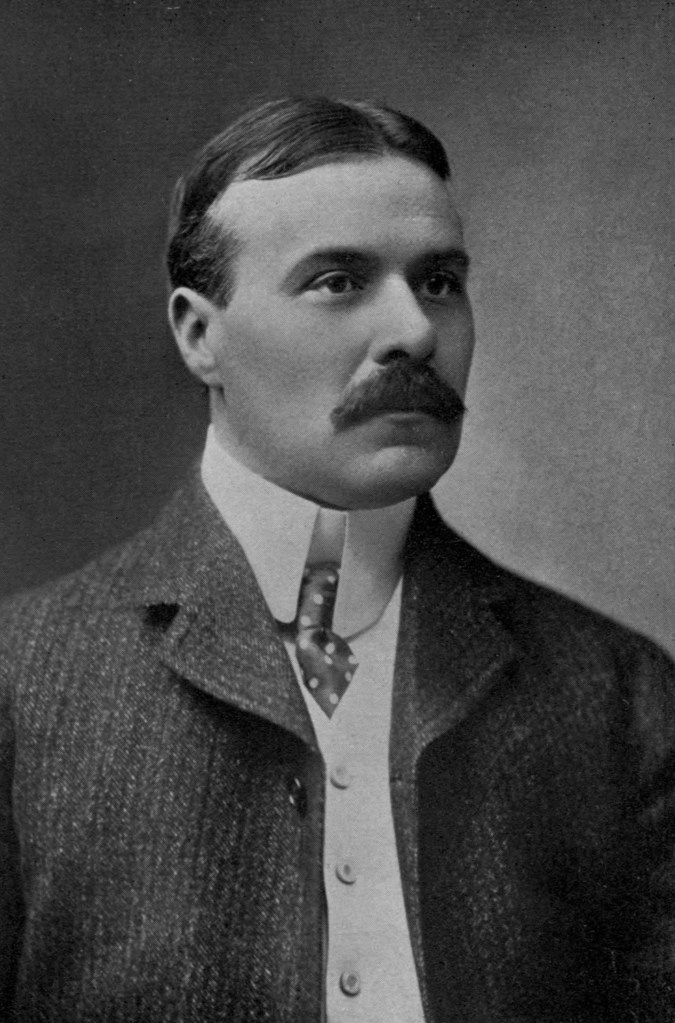
Robert W. Chambers might be an author that you’re unfamiliar with but his work inspired H.P. Lovecraft’s and that alone makes him worth knowing. If you have heard of Robert Chambers, it is most likely because of the King in Yellow, which is a collection of short stories that includes influential cosmic horror stories that Lovecraft read and admired. Surprisingly, despite their shared interest in elder gods, Robert W. Chambers’ personal life is almost the complete opposite of H.P. Lovecraft’s. Chambers was born in a well-off family and was able to study art and pivoted later in life to writing. H.P. shunned the outdoors and led a reclusive and sad life, where as Chambers thrived outside and appreciated writers like Emerson and Thoreau. Robert W. Chambers was also financially successful as a writer which is not something Lovecraft could ever really claim. While the two men’s lives couldn’t be more different, Chambers’ influence on Lovecraft’s work is important and if you want to witness it for yourself, The King in Yellow is well worth reading.
The King in Yellow is an interesting and somewhat unsual collection of short stories. The first four stories are focused on the sort of cosmic horror that any Lovecraft fan would seek out. The rest of the book is focused on Chambers’ more commercially successful writing interest, romance stories. So yes, the King in Yellow is a mix of cosmic horror set in the United States and romance stories set in France, where Chambers studied art. It is an odd mix, though some literary scholars think that all of the stories in this collection are meant to critique the Decadent movement that many artists joined during Chambers’ life. The Decadent movement is one that was largely unfamiliar to me prior to reading The King In Yellow but it essentially savors excess and pleasure over morality. If you’ve played Warhammer 40,000, then its hard not to think of the Chaos Gods here. The King in Yellow is believed to be a critique of the Decadent movement and if you like literary theory at all, this is a great lens to view these short stories. I mention all this because its interesting and it might be something someone would want to explore further. Having said that, the rest of this article is going to approach The King in Yellow from the perspective of Arkham Horror and whether the stories are worth reading for fun or not.
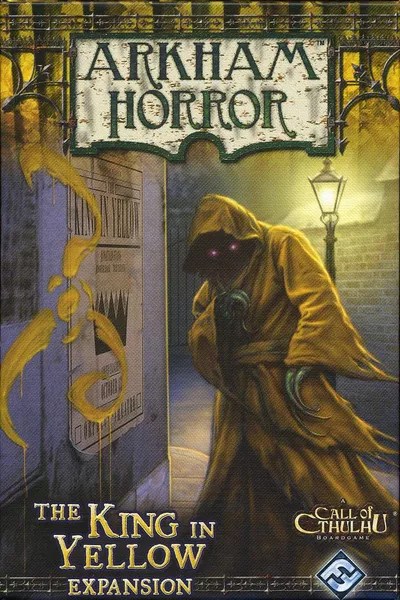
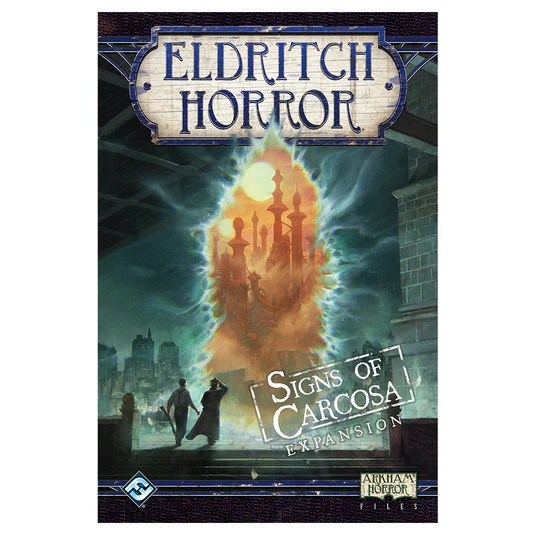
If you aren’t familiar with Arkham Horror, it is a collection of board/card games made by Fantasy Flight Games. There is also a tabletop RPG and a line of books inspired loosely by H.P. Lovecraft and pulp magazines in more recent years. In terms of the games, the King in Yellow has inspired several releases including:
Arkham Horror: Second Edition – King in Yellow expansion
Eldritch Horror: Signs of Carcosa
Arkham Horror: The Card Game – The Path to Carcosa
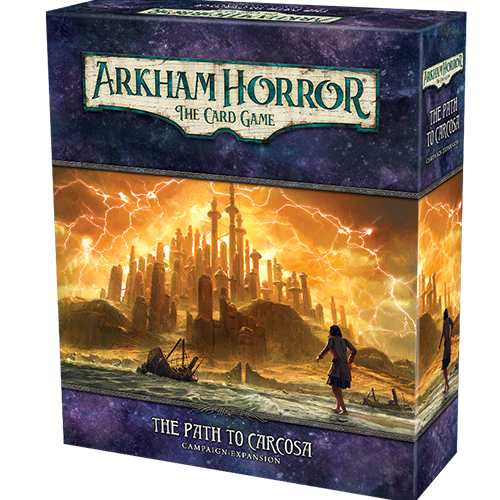
If you track Arkham Horror’s release history, Carcosa (which plays a role in The King in Yellow) is brought to most of Fantasy Flight Games’ games eventually. The three pictured above are all mainline game that are well supported by the publisher. All this is to say if Robert W. Chambers’ influence on H.P. Lovecraft isn’t enough, he also inspires Arkham Horror releases over a hundred years after The King in Yellow’s publication which is no small feat.
With all of that information out of the way, we can now talk about the stories themselves and I’ll try and give you a taste of what they’re about without spoiling anything important. Much like the play, The King in Yellow, which drives people mad from reading it, if I spoil much, it might make you not want to read it and share in the madness, which would be a pity!

The Repairer of Reputations – There are a few different and ambitious things going on at once in this short story. The first is that the story is set in an alternative and speculative future history of the United States. While this story ostensibly takes place around the time of World War I, this was written well before the Great War and that alone makes for an interesting opening. There is a sinister twist to this alternate history as well. There are marble chambers installed in various places around United States by the government where people can freely commit suicide, if they desire. This really sets the mood for what is to come and is shocking to read even a hundred years removed.
The narrator is unreliable and like many good horror stories of this era, you slowly peel back the layers to realize how mad they are. There is also another character, Mr. Wilde, who is physically deformed and has a violent cat that seems to be trying to kill him. This is not played for laughs or is meant to be any kind of statement on cat ownership. It adds to the sinister feeling of the story. Mr. Wilde is extorting and controlling people based on past indiscretions which is where the title comes from. Surprisingly, the narrator admires Mr. Wilde in spite of everything repugnant about him which is an obvious sign of the narrator’s unreliability.
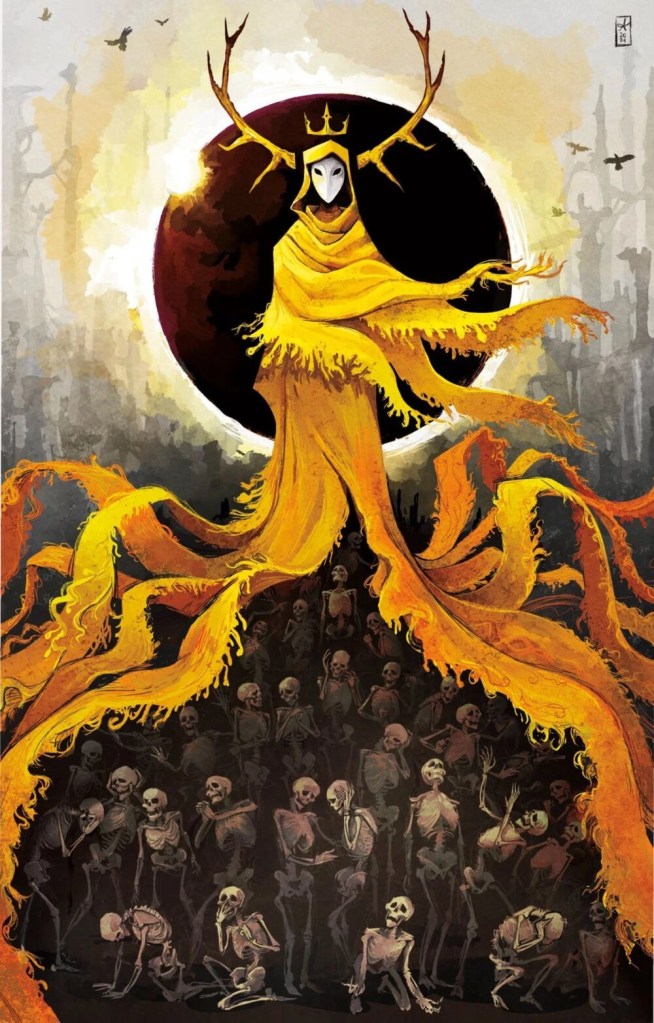
The final and the most important part is the actual King in Yellow, Hastur. If you’ve played Arkham Horror at all, then you’re familiar with Hastur already but even if you don’t know who that is, it doesn’t impact enjoyment of the story. The protagonist and Mr. Wilde are followers of Hastur, which is an elder god like Cthulhu. As previously mentioned, The King in Yellow is a play which drives anyone who reads it crazy. The play itself is mentioned only in passing but you can see the effects in this story which is where the tension and horror really start to build so I will say no more about that.
This short story keeps your attention with the slow reveal of the narrator’s madness and what exactly is going on with him and Mr. Wilde. While it is a short story and thus, does not have a protracted narrative anyway, there is a constant tension and suspense throughout. While there are many parts that feel real, there is an element of the surreal that grows and compliments the horror here. All in all, this is a creative story that is different than Lovecraft’s work but still delivers the kind of cosmic horror that Arkham Horror fans crave. I would venture to say its on the level of Lovecraft’s best work as well.


The Mask – There is much less to say about this story though it is still interesting. This story demonstrates Chambers’ interest in art as two of the characters are artists who happen to be in a love triangle with a third woman. One of the artists is doing some strange experiments to create art which is where most of the creepiness in the story comes from. It is more of a subtle horror compared to the previous story. In my opinion, there is nothing bad about this story but the ending. For me, it is too inconclusive and unsatisfying which diminished the story as a whole though I can appreciate how this story fits in with the greater narrative that Chambers is telling.

In the Court of the Dragon – This short story has an unusual setting for cosmic horror: a church. In Arkham Horror, the church might provide some respite from the madness of the elder gods, but not here. Similar to The Mask, the horror is a bit more understated here and a pale man in black is stalking the narrator. I can’t say too much else without spoiling anything so I will sum this one up by saying its good but not great. It does setup things that come up in the next short story but overall, it is missing something to make it more interesting or gripping.

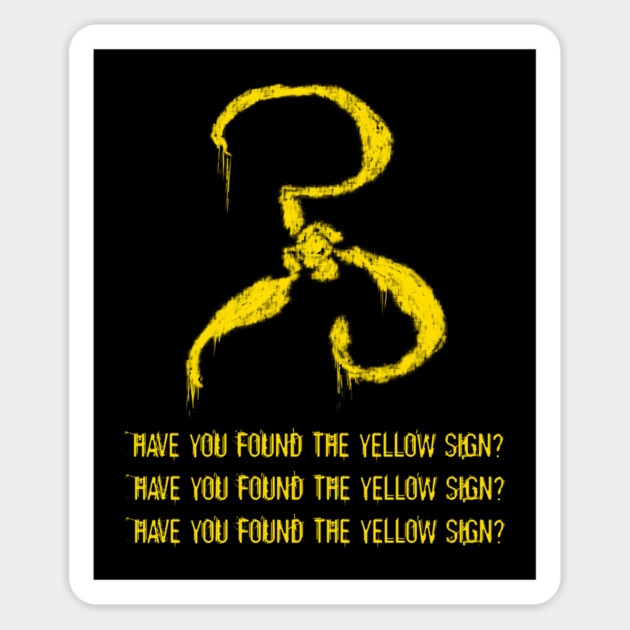
The Yellow Sign – As mentioned previously, the Yellow Sign has shown up in a few Arkham Horror games so its very likely that you’ve heard of it, even if you don’t fully understand the meaning. And indeed, this story is a nice way to cap off these cosmic horror stories and reveal a bit more about the King in Yellow. The protagonist, another artist, is romantically interested in his model but things start to go awry when he sees a very off-putting and inhuman man guarding the local church. That causes him to be unable to paint the girl’s portrait and things get darker and more sinister from there. This is another very good story and I think more than the previous two, it shows how dangerous “The King in Yellow” and Hastur are. It also provides a satisfying conclusion to the series of stories as a whole, which I greatly appreciated.

And that’s it for the cosmic horror in The King in Yellow, if you can believe it! The rest of the short stories are focused on romance instead of cosmic horror. From what I gather, the stories are meant to continue Chambers’ critique of the Decadent movement which is what ties together this collection of otherwise disparate work. Since my interest is in Arkham Horror, cosmic horror, and weird fiction, we won’t delve into the rest of the short stories in this article, but they’re there to explore if you’re so inclined.
The four short stories I have reviewed here provide a nice narrative arc of cosmic horror afflicting mostly artists. Its worth noting that Chambers’ writing stands out from Lovecraft’s by being pretty approachable in the writing style but no less imaginative. This is a distinct flavor of cosmic horror that Chambers created and has since been explored quite a bit. One day, I hope to take a look at work inspired by Chambers on this humble website but for now, I would give The King in Yellow a strong recommendation to Lovecraft and Arkham Horror fans. The King in Yellow provides a little less than 100 pages of inter-connected cosmic horror which you can easily find physically or as a digital copy, depending on your preference. I actually read a free copy of these stories available on Apple Books. While there was no scholarly material like an introduction, biography of Robert W. Chambers, or footnotes provided, I didn’t feel as though I needed them to enjoy the stories. There is a lot of discussion about Chambers and The King in Yellow on Youtube you can consume, if you’re interested as well. So money is no obstacle if you want to discover the horrifying nature of the King in Yellow and tangle with Hastur itself! Reading these stories not only introduced me to some new favorites but I believe it will enhance my enjoyment of Arkham Horror in the future as well so The King in Yellow gets a strong recommendation.


Very interesting read, while familiar with Lovecraft (and enjoyed the books) I hadn’t heard about Chambers.
“cosmic horror set in the United States and romance stories set in France” hits a little too close to home.
LikeLiked by 1 person
Glad to hear it! I’ve been digging into Lovecraftian work lately and I will spotlight some other authors that precede H.P. and maybe ones who wrote after him too. There’s a lot more out there than I realized so I’ll be spoiled for choice.
And yes, sadly the cosmic horror has descended on us. Each day I think it can’t get much worse, it finds a way!
LikeLike
Great review Jeff, and interesting to hear the background behind the writer, which helps to see where his inspiration comes from, and interesting to read how his work influenced Lovecraft.
LikeLiked by 1 person
I enjoyed researching and writing this article and its nice to hear that you appreciated some of the research that I did too. I learned a lot in the process and found a new cosmic horror author that I enjoy. Lovecraft and Edgar Allen Poe will have to make some room for other authors for the first time in my life!
LikeLiked by 1 person
I’ve been meaning to read the king in yellow for quite a while, and you’ve pushed it up on my to read list! Seems very interesting, thanks for the review!
LikeLiked by 1 person
Glad to hear it! If you aren’t taken with reading the Romance stories, the four short stories I discussed are pretty quick to get through which I appreciated.
LikeLiked by 1 person
I’ve started down a King in Yellow rabbit hole so this is super useful and timely. I wasn’t aware of all the literary offshoots and will have to check some of these out. Great work!
LikeLiked by 2 people
I’m really glad to hear it! The play must not have driven me mad because I am excited to read some more works that are inspired by the King in Yellow now. I think one of the better Youtube videos I found on the subject is this one: https://www.youtube.com/watch?v=hvSg_Q-6Zck, if you want to learn more about the literary side of things and what likely inspired Chambers’ writing.
LikeLiked by 1 person
Thanks for writing this. I don’t think I’d been aware until now of how much of the ‘Cthuluverse’ predates Lovecraft’s own work.
LikeLiked by 1 person
It was my pleasure! There are some other authors that predate Lovecraft that I will check out sooner or later. There are lots that survived H.P. and kept writing too. So this could be a recurring article type as I get time to read stuff.
LikeLike
If you would like to read more KiY stuff and not have to do as much research to find it all, I’ve read a bunch and have it listed on my blog:
https://bookstooge.wordpress.com/tag/king-in-yellow/
Sorry to self-promote, but the King in Yellow deserves a wider audience and anything I can do to help promote reading stories about him is important to me. Good or bad, I’ll read the stories 😀 If you’ve come across any novels or collections that I haven’t read, please let me know about them.
LikeLiked by 1 person
Thanks for the recommendation! That does look helpful and I’ll definitely reference it for some more reading ideas. I’m definitely curious to read more about the King in Yellow and possibly go mad as a result 🙂
LikeLiked by 1 person